A new paper in my field meta-analyses the Sensitivity and NPV at 10% prevalence for diagnostic algorithms to risk stratify patients in the emergency department for possible myocardial infarction (https://emj.bmj.com/lookup/doi/10.1136/emermed-2026-215922).
The meta-analysed point estimates of the studies are a Sensitivity of 98.0% and NPV of 99.9% (assuming 10% prevalence). These, though, are incongruous to me because it is not possible to have an NPV of 99.9% with a sensitivity of 98.0% in a population with 10% prevalence. I understood how they arrived at this - by two separate meta-analyses. My question is, is it possible to meta-analyse sensitivity and NPV (adjusted to be at 10% prevalence) together?
If the studies they used for NPV have other data that allow for getting the 2x2 you can just do a bivariate meta-analysis of Sens/Spec and then calculate PPV/NPV for the pooled estimate at any baseline. In my experience even if a paper doesn’t report the 2x2 directly you can usually assemble it from the breadcrumbs they leave.
There’s another argument about whether we should be using/synthesizing sens/spec at all but all we can do at the meta-analysis end is work with what’s available.
1 Like
Sensitivity and Specificity are highly dependent on the spectrum of disease in the studied population. In my field a lof of the studies are case control so you cant calculate NPV and PPV. I performed a DTA meta-analysis for an endocrinologic test in horses for Cushings disease. I also did one for fun on the so called “blood biopsy” for pancreatic cancer in people. Study heterogeneity was large in the horse studies and massive in the blood biopsy studies varying across countries, study design ets. Also all of these studies
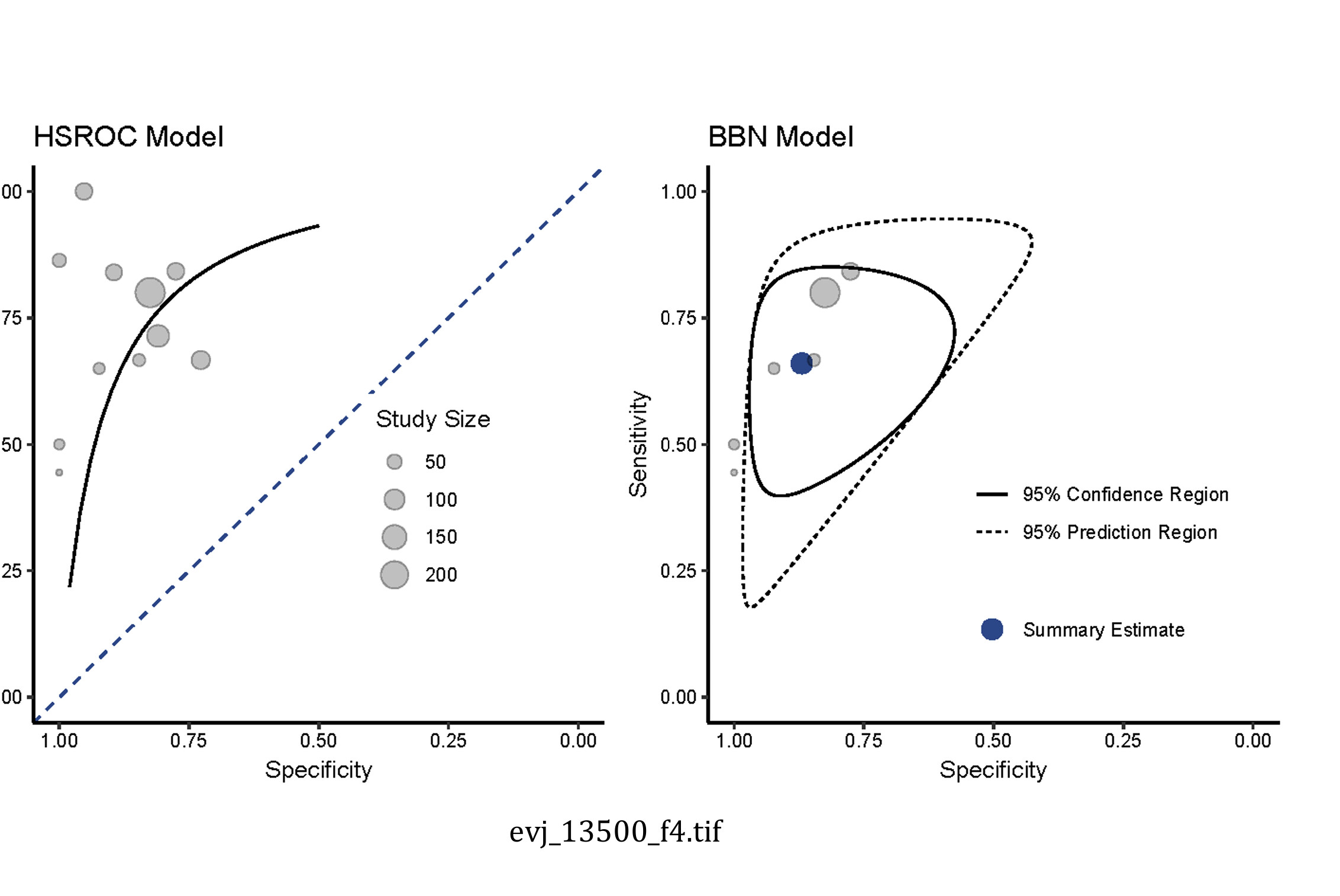
involve thresholds if you have a continuous biomarker which as Prof. Harrell says makes no sense. I also agree with him that the only valuable meta-analysis, DTA included would be an individual patient data meta analysis. I have attached plots from my study to show how to demonstrate heterogeneity between studies. I squared is not useful as Richard Riley repeatedly points out. I find the prediction interval based on between study variance to be the most valuable.
4 Likes
This makes sense. Thanks.