From the paper (red line mine to indicate approximately 50% reduction):
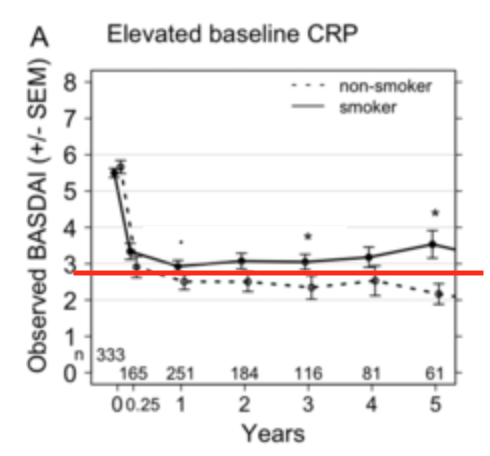
If you dichotomize, you throw out information. Here, people with a 49% reduction are treated as equal to people with no reduction. People with 51% reduction are treated as equal to 90% reduction. 49% and 51% are treated as if they are very different. If it so happens that the average effect in the two groups fall on either side of this line in the sand, the effect gets amplified.
(should include disclaimer that 50% reduction may in fact be a meaningful threshold - I have no idea. I’m just attempting to explain why the dichotomized results come out significant and the continuous ones don’t)