This may be a very strange question. A veterinary pharmacologist contacted me regarding a horse that was drug tested at a lab in France and the sample value was 3.1 ng/ml for meloxicam, a second test of the same sample in the UK yielded 1.9 mg/dl. The threshold for a penalty is 1 ng/ml. He wondered if I could determine the probability that 1 ng/ml is the true value using statistics. Obviously the information is limited and he doesnt no the precision of the equipment used to make the measurements. Would there be a Bayesian method to make this determination or could some sort of simulation be done? What other information would be essential in addressing this problem.
1 Like
In any such Bayesian application, the priors would be king. These would have to come the lab’s preceding characterization of the performance of the test in their facility. The reduced concentration upon re-testing reminds me a bit of the phenomenon Richard Feynman described in which the time-series of experimental measurements of some physical constant (c, I think) exhibited autocorrelation. Finally, a recent scandal in the crime lab here in Massachusetts, where evidence in 34,000 cases was falsified, would also put fraud into my own priors for a matter such as this.
2 Likes
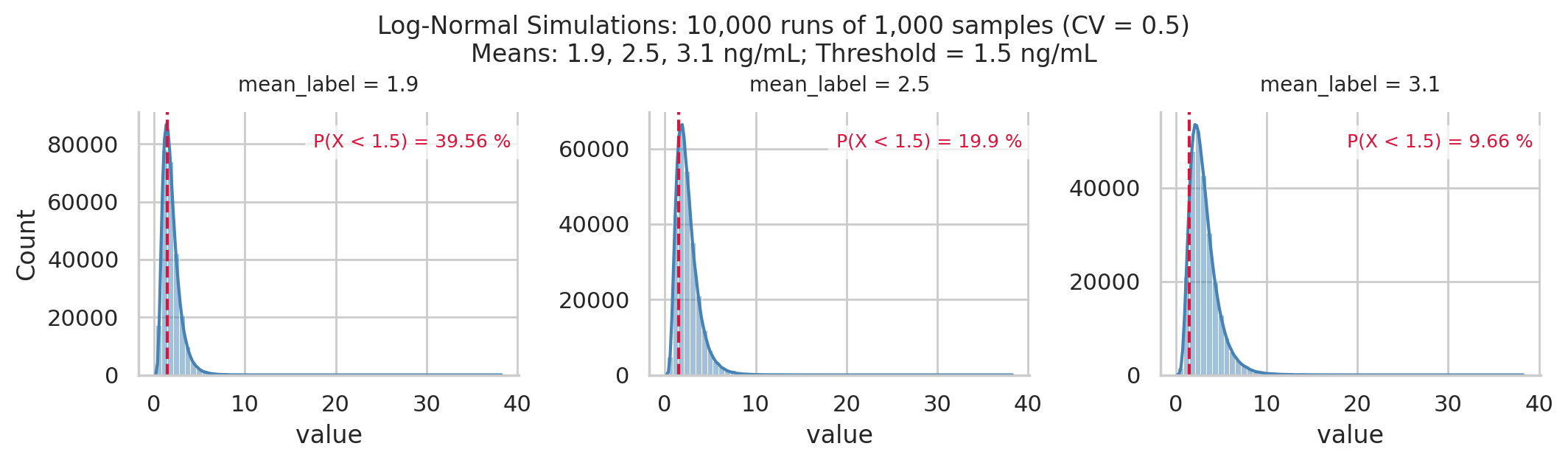
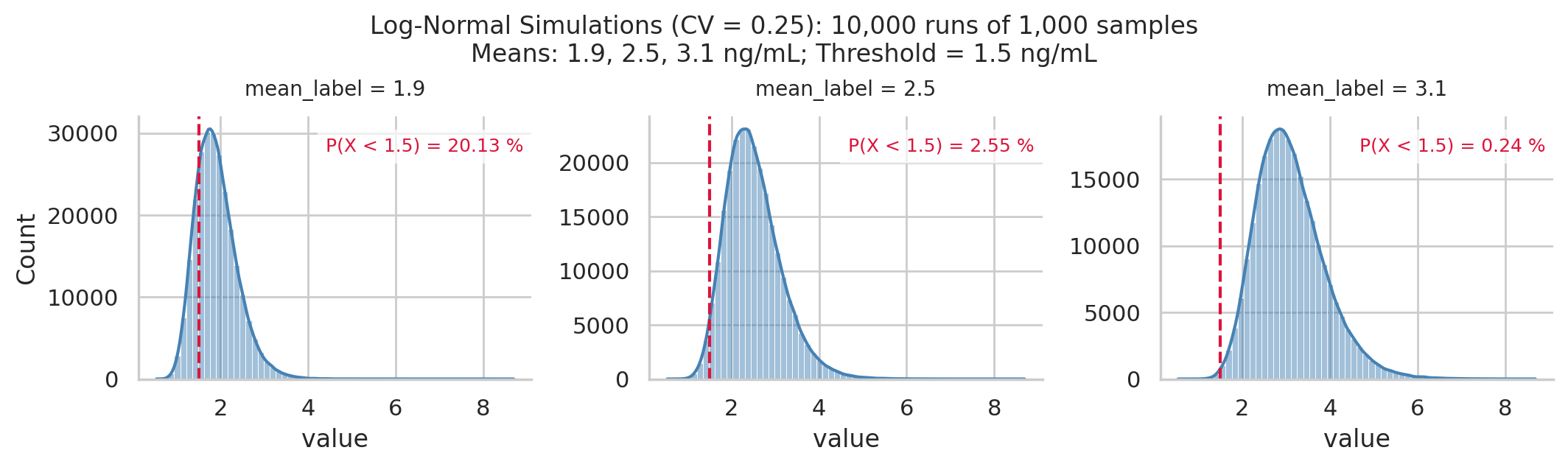
I ran simulations assuming the metabolite distribution was log normal under assumptions of different coefficients of variation at 3 different mean values and calculated the percentage of values that would be below the clinically meaningful threshold. Not sure if this would offer any evidence of value in decision making.